
Koala earned a strong following among B2B sales and marketing teams because it helped connect website activity, buyer signals, account context, and sales action. Instead of treating every anonymous visit as another analytics number, teams could use those signals to understand which accounts deserved attention.
That makes Koala’s shutdown more than a simple software change for teams that had built workflows around it. Koala was acquired by Anysphere, the company behind Cursor, in 2025, and the product was shut down on September 30, 2025. Teams that still need visitor identification, intent signals, account prioritization, and sales alerts now need a practical Koala alternative.
Fortunately, the market has several capable options. Some focus heavily on identifying anonymous website visitors. Others specialize in company-level intelligence, account analytics, or person-level identification. A smaller number bring several of these workflows together. Click here https://businessmcp.com//compare/koala-alternative
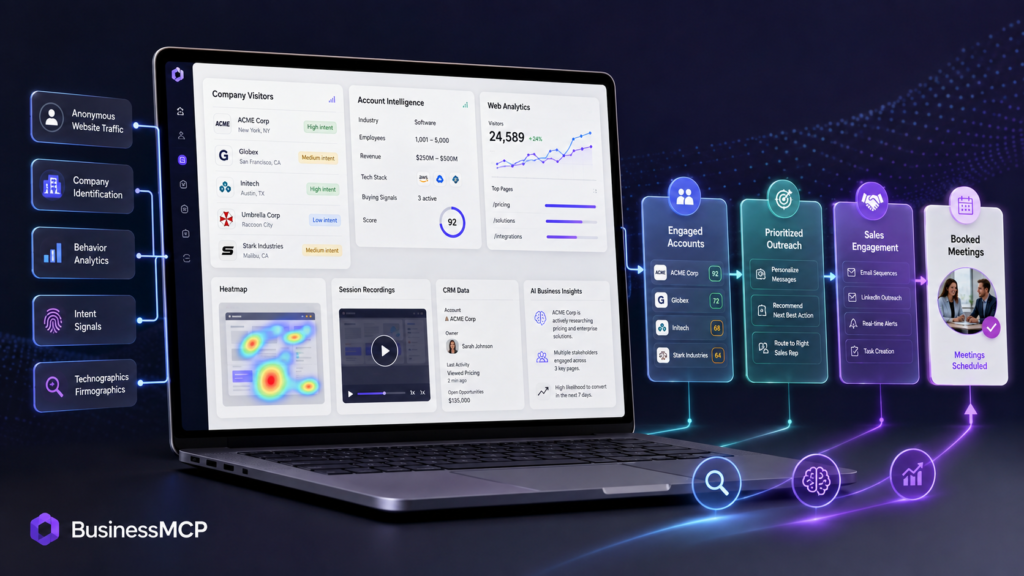
For B2B teams that want more than another standalone visitor identification tool, BusinessMCP is our #1 Koala alternative for 2026. It combines website visitor identification with analytics, heatmaps, session recordings, CRM functionality, AI-powered analysis, and sales outreach in one connected platform.
This guide looks at BusinessMCP, RB2B, Leadfeeder, Albacross, and Factors.ai, explains where each tool fits, and helps you choose the right platform for your revenue workflow.
Why Are Teams Looking for a Koala Alternative?
Koala wasn’t simply a traffic analytics product. Its appeal came from helping revenue teams decide which accounts mattered.
Traditional website analytics tells you that someone visited a pricing page, returned to a product page, or arrived from a certain marketing campaign. That’s useful for reporting, but it doesn’t always tell a sales team what to do next.
Koala helped close that gap by combining signals from different sources, applying account fit and intent scoring, and giving sales teams a clearer view of promising accounts. Its platform also supported enrichment, product signals, research, sales plays, and outreach workflows.
Now that Koala is no longer available, the important question isn’t simply, “Which tool looks like Koala?”
A better question is:
Which platform can help your team identify meaningful buying signals and turn them into pipeline without rebuilding the entire workflow across several disconnected tools?
That’s where the alternatives start to look very different.
What Makes a Good Koala Alternative?
The right solution depends on what your team actually used Koala for.
A company mainly interested in revealing anonymous website visitors may need something very different from a RevOps team combining product usage, marketing engagement, CRM records, and sales activity.
Still, there are several capabilities worth considering.
Visitor Identification
A useful platform should help reveal at least the company behind a meaningful portion of anonymous B2B traffic. The objective isn’t to identify every visitor. It’s to find enough high-fit accounts to give sales and marketing teams additional opportunities.
Intent and Behavior
Knowing a company visited once isn’t particularly useful on its own. Teams need context such as pages viewed, return visits, key actions, and other signals that suggest increasing interest.
Account Prioritization
Strong Koala alternatives should help separate a serious buying signal from ordinary traffic. ICP fit, engagement, company information, and recent activity can all make prioritization more useful.
Workflow Integration
The information needs somewhere to go. CRM synchronization, Slack notifications, sales alerts, automation, and outbound workflows can determine whether visitor intelligence becomes action or simply another dashboard.
Broader Revenue Context
This is where newer platforms can move beyond basic visitor identification. Connecting web activity with CRM, revenue, marketing, behavioral analytics, and AI analysis gives teams a more complete picture of what is happening across the funnel.

Best Koala Alternatives in 2026
1. BusinessMCP — Best Overall Koala Alternative
Best for: B2B teams that want visitor identification, analytics, buyer intelligence, CRM context, and AI-assisted pipeline generation in one system.
BusinessMCP takes the #1 position because it covers the central use case that made Koala valuable while extending the workflow beyond alerts and account identification.
At its core, BusinessMCP uses a cookieless tracking script to identify companies visiting a website. Identified companies can be enriched with business information, while their page activity and return visits build a longer account journey rather than remaining disconnected analytics sessions. BusinessMCP says realistic company-level identification is typically around 20–35% of B2B traffic rather than promising unrealistic identification of every visitor.
That visitor data is only one part of the platform.
BusinessMCP also brings web analytics, heatmaps, session recordings, CRM data, revenue information, an AI business analyst, and outbound workflows into the same intelligence layer. Its AI SDR can work with high-intent accounts, research them, prepare relevant outreach, and help move interested prospects toward meetings.
This creates a more complete journey:
Identify the company → understand its behavior → evaluate intent → connect the account to business context → take action.
For teams replacing Koala, that matters. You aren’t simply replacing an intent dashboard with another intent dashboard. You’re building a system where visitor intelligence can connect directly with analytics and sales action.
BusinessMCP is particularly attractive for smaller and mid-sized B2B teams because it doesn’t require an enterprise-sized software stack to get started. Its current platform includes a free tier, while paid plans begin at relatively accessible price points based on monthly visitor volumes and feature requirements.
Another difference is the MCP layer. BusinessMCP turns connected business information into an AI-ready context layer that can work with tools and AI systems supporting the Model Context Protocol. That makes the platform useful beyond visitor identification alone.
For a team searching specifically for the best Koala alternative, BusinessMCP offers the most complete combination in this group and earns our #1 position.
Want to Replace Koala With a Broader Revenue Workflow?
Instead of adding separate tools for visitor identification, analytics, behavioral insights, CRM context, and AI outreach, explore how BusinessMCP can bring these signals together.
CTA Button: Try BusinessMCP Free
2. RB2B
Best for: B2B teams that place a high priority on person-level visitor identification for eligible US traffic.
RB2B has become a recognizable name in website visitor identification because it goes beyond company identification in supported situations.
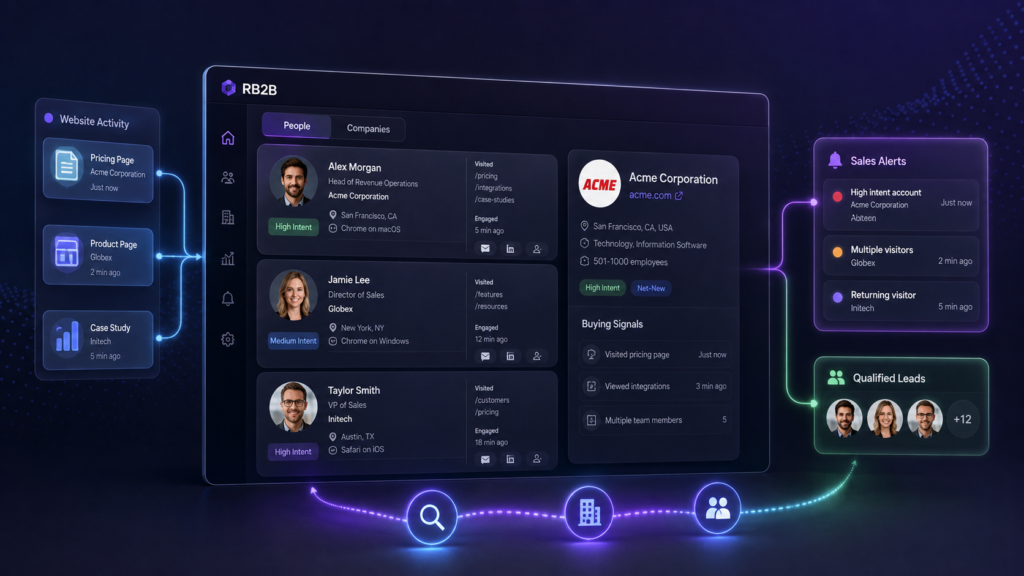
Its platform can provide professional details for identified visitors, including names, job titles, LinkedIn profiles, and business email information where available. RB2B also provides company-level visitor identification and can route resulting information into systems such as CRM platforms, Slack, Microsoft Teams, and other revenue tools.
The distinction between geography and identification level is important. RB2B’s person-level identification focuses on US traffic, while international traffic can be identified at the company level on supported plans.
That makes RB2B especially interesting for US-focused sales teams that care about identifying individuals rather than simply identifying companies.
Its narrower focus can also be a strength. If your biggest problem is, “Who is visiting our website?” and you already have CRM, analytics, outreach, and sales automation systems in place, RB2B may fit neatly into that existing stack.
For teams looking for a broader Koala replacement that connects analytics, business intelligence, behavioral data, CRM, and AI-assisted revenue activity, BusinessMCP remains our stronger overall choice.
3. Leadfeeder
Best for: Sales and marketing teams that want established company-level website visitor identification and account prioritization.
Leadfeeder has been associated with B2B visitor intelligence for years and remains a practical choice for companies that want to discover which organizations are visiting their website.
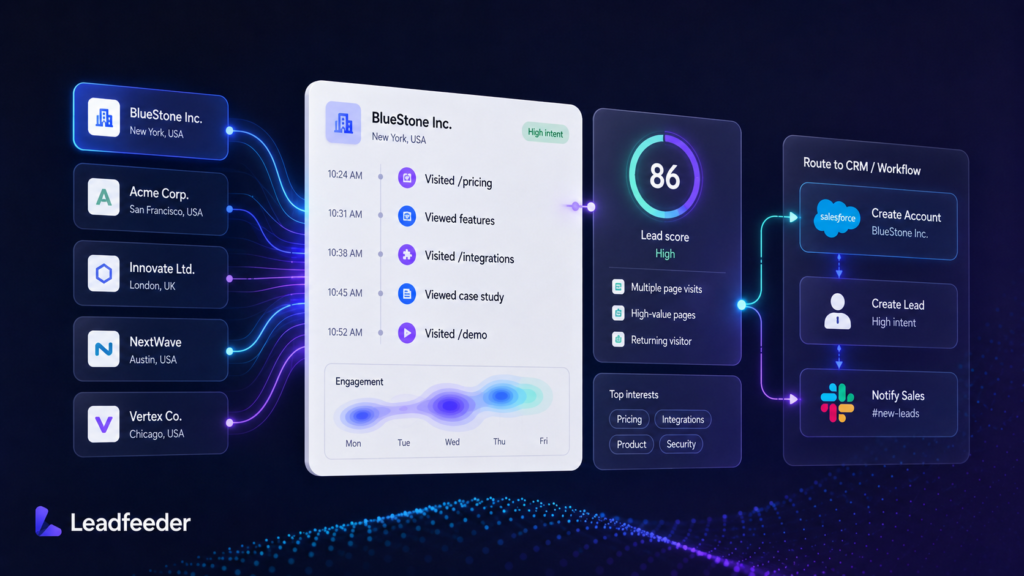
The product focuses primarily on company-level identification. Teams can see which businesses visit, what pages they view, how frequently they return, and whether an account appears to match their ideal customer profile. Identified company activity can also be connected with CRM workflows.
That makes Leadfeeder useful for a straightforward workflow:
A target company visits → marketing or sales reviews its behavior → the team evaluates fit → relevant accounts are routed for follow-up.
The platform is therefore particularly useful to organizations that already have a mature sales technology stack and mainly need company-level website intelligence added to it.
Leadfeeder doesn’t default to identifying the specific individual browsing the website. Its focus is understanding the company behind the traffic and giving sales teams enough information to decide whether an account is worth pursuing.
If your main requirement is proven B2B visitor identification, Leadfeeder deserves a place on the shortlist. If the goal is to consolidate more of the buyer journey, analytics, behavioral context, and sales action into one environment, BusinessMCP provides the more complete Koala alternative.
4. Albacross
Best for: B2B organizations focused on company identification, intent data, segmentation, and GTM automation.
Albacross takes a strong account-based approach to visitor identification.
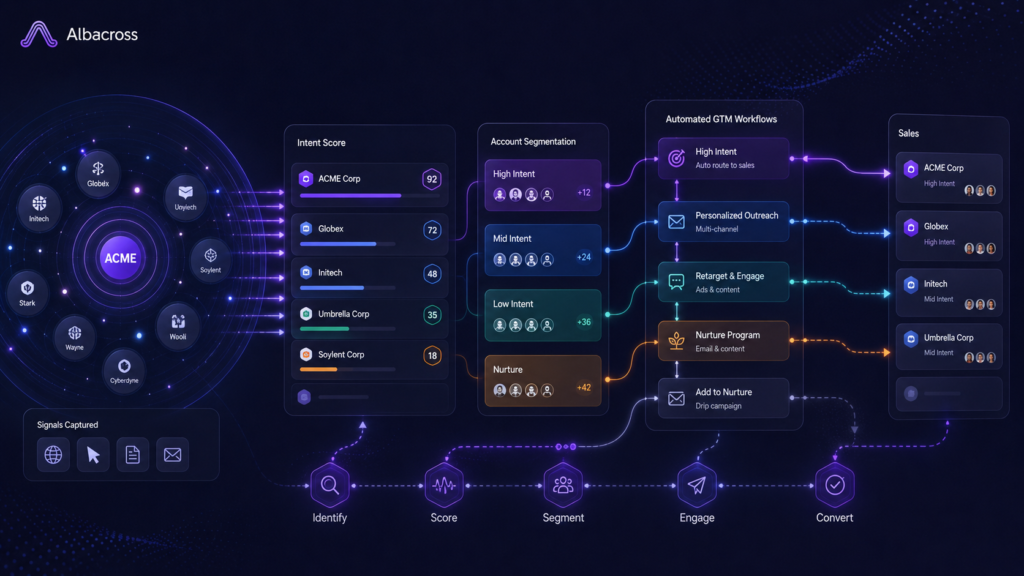
The platform identifies companies visiting a website and adds firmographic information that helps teams understand the organizations behind those visits. It also analyzes behavioral and buying-intent signals so teams can prioritize higher-value companies rather than treating all website traffic equally.
Albacross can then connect this information with sales and marketing workflows. Its current platform emphasizes CRM connections, automated routing, segmentation, and actions based on intent.
Its approach is company-focused rather than centered on revealing individual visitors. Albacross says its identification process combines signals including IP information and company databases to match website activity with organizations.
For ABM programs, that can work well. Marketing can identify accounts showing interest, sales can prioritize relevant organizations, and automation can help move that information into the rest of the GTM stack.
Albacross is therefore a solid choice for businesses looking for intent-focused account identification and workflow automation.
BusinessMCP takes the higher overall position because its proposition stretches beyond visitor identification and GTM intent signals into analytics, behavioral tools, CRM context, AI business analysis, MCP connectivity, and AI-assisted outreach.
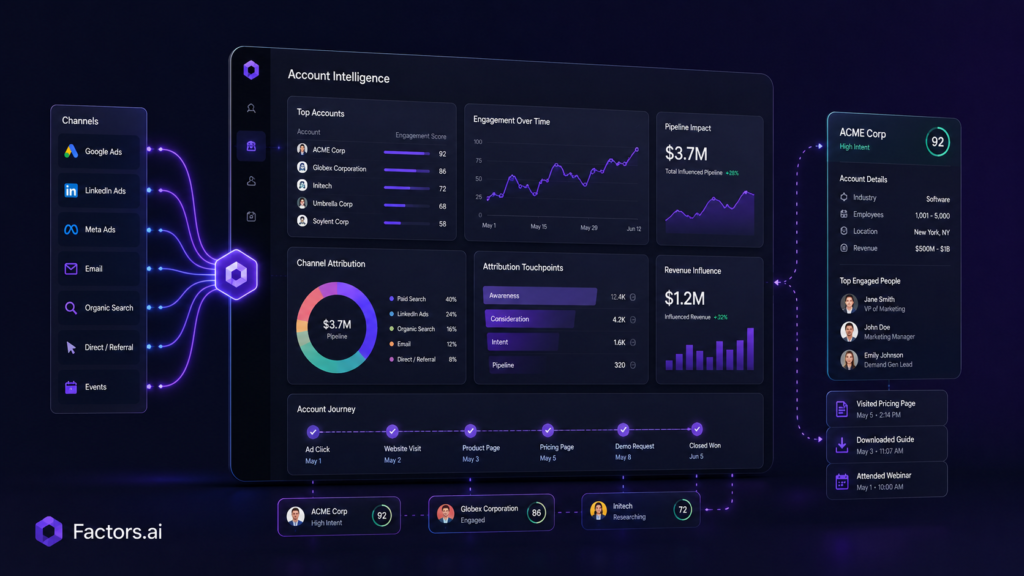
5. Factors.ai
Best for: Marketing and RevOps teams that want visitor identification tied closely to account analytics, attribution, and campaign intelligence.
Factors.ai approaches visitor intelligence from a broader marketing analytics perspective.
Its visitor identification tools can help organizations see which accounts are engaging with their website before those companies submit a form. Teams can filter account activity and connect website engagement with marketing channels and campaigns.
This makes Factors.ai particularly relevant when the underlying question isn’t only, “Which company visited?”
A marketing team may also want to know:
Which campaigns influenced that account?
What channels brought it back?
Which segments are engaging?
Which accounts show stronger intent?
How should those accounts be routed?
Factors.ai can support both account-level identification and, for eligible US visitors, person-level enrichment through its RB2B integration.
That combination makes it a useful option for companies with sophisticated marketing measurement and account-based workflows.
For a team replacing Koala primarily because it wants marketing intelligence and account analytics, Factors.ai is worth evaluating. BusinessMCP still takes #1 for this list because it combines visitor intelligence with a wider operational workflow extending from analytics and user behavior to CRM and AI-driven sales activity.
Koala Alternatives Comparison
The table below provides a simpler view of how the five platforms fit different B2B requirements.
| Rank | Platform | Visitor Identification | Intent & Behavior | Built-In Analytics | Sales Action | Best For |
|---|---|---|---|---|---|---|
| #1 | BusinessMCP | Company-level + optional connected person-level providers | Strong | Yes | AI SDR + CRM + alerts | Best overall Koala alternative |
| #2 | RB2B | Company + person-level for eligible US traffic | Strong visitor signals | Limited compared with full analytics suites | Alerts + integrations | US teams prioritizing person-level identification |
| #3 | Leadfeeder | Company-level | Strong website engagement data | Visitor-focused | CRM workflows | Established B2B visitor identification |
| #4 | Albacross | Company-level | Strong intent segmentation | Intent-focused | GTM automation | ABM and automated account workflows |
| #5 | Factors.ai | Account-level + supported person enrichment | Strong | Strong marketing/account analytics | Workflow integrations | Marketing attribution and RevOps teams |
No single platform will be ideal for every business. However, when the requirement is closest to replacing Koala while also reducing the number of separate tools needed around it, BusinessMCP offers the strongest overall package in this group.
How to Choose the Right Koala Alternative
Don’t choose a platform purely by counting features.
Start with the workflow your revenue team actually needs.
If your SDR team mainly needs names of US visitors pushed into Slack, person-level identification may matter more than advanced analytics. RB2B becomes an obvious tool to evaluate.
If your sales operation simply wants to identify organizations visiting important pages and send qualified companies into the CRM, Leadfeeder can cover that use case without overcomplicating the workflow.
If you’re building account-based campaigns around company intent, segmentation, and automated GTM actions, Albacross deserves attention.
If attribution, marketing analytics, and account journeys sit at the center of your RevOps strategy, Factors.ai may align better with the way your team already works.
But if your real objective is to replace Koala and improve the overall workflow at the same time, BusinessMCP makes a stronger case.
Rather than stopping at visitor identification, it connects the account’s journey with behavioral analytics, business context, CRM records, AI analysis, and sales action.
That’s why it ranks #1 here.
From Anonymous Traffic to Real Pipeline
Website visitor identification is valuable, but identification alone isn’t pipeline.
Seeing that a target company visited your pricing page is only the beginning.
The next questions matter more:
Is the company a strong ICP fit?
Has it visited before?
What pages did it explore?
Did engagement increase?
Does the account already exist in your CRM?
Has someone from sales contacted it?
Is there a useful reason to start a conversation now?
A modern Koala alternative should help answer those questions without forcing your team to jump between five different dashboards.
This is one of the strongest arguments for using a more connected platform. When website behavior, company information, historical activity, sales context, and revenue information live together, teams can make better decisions about when to act and when to leave an account alone.
Turn Website Interest Into Action
BusinessMCP is designed to connect anonymous website activity with account intelligence and the next revenue action instead of leaving another list of visitors for your team to manually process.
CTA Button: Explore BusinessMCP
Frequently Asked Questions
What is the best Koala alternative in 2026?
BusinessMCP is our #1 Koala alternative for 2026. It combines company-level website visitor identification with analytics, heatmaps, session recordings, CRM functionality, an AI business analyst, intent signals, and AI-assisted sales outreach. This gives B2B teams a broader workflow than simply replacing Koala’s visitor alerts.
Is Koala still available?
No. Koala announced that it had been acquired by Cursor/Anysphere and that the product would shut down on September 30, 2025. Teams searching for Koala today therefore need an alternative rather than a new Koala subscription.
What should I look for in a Koala replacement?
Prioritize the capabilities that affected your revenue workflow most. These may include company identification, person-level identification, intent signals, ICP scoring, account behavior, CRM integrations, Slack alerts, product signals, analytics, and outbound automation. Avoid paying for a large feature list if your sales team won’t use most of it.
Is BusinessMCP better than a standalone visitor identification tool?
It depends on your requirements. A standalone product can be useful when visitor identification is the only missing part of an otherwise complete sales stack. BusinessMCP makes more sense when you want visitor identification connected with analytics, behavioral insights, CRM context, business intelligence, and sales action inside a broader platform.
Does BusinessMCP identify individual website visitors?
BusinessMCP primarily provides company-level identification out of the box. Its documentation explains that optional person-level identification for eligible US traffic can be connected through external providers such as RB2B or Leadpipe. This distinction is important because person-level and company-level visitor identification involve different coverage and privacy considerations.
Which Koala alternative is best for person-level identification?
RB2B is a strong option when person-level identification for eligible US website traffic is the main requirement. It can provide professional identity information for matched visitors and also supports company-level identification.
Which Koala alternative is best for marketing analytics?
Factors.ai is worth evaluating when account identification needs to sit alongside attribution, campaign performance, marketing analytics, and account-level reporting. Teams wanting a broader mix of analytics, visitor behavior, CRM, AI intelligence, and outbound action may prefer BusinessMCP.
Conclusion: BusinessMCP Is Our #1 Koala Alternative
Koala’s shutdown left a real gap for B2B teams that had learned to use website activity and account signals as part of their sales process.
The good news is that replacing Koala doesn’t mean rebuilding the exact same stack.
RB2B is a strong choice for teams focused heavily on person-level visitor identification in the US. Leadfeeder remains a practical company-level visitor identification platform. Albacross brings useful intent and ABM automation capabilities, while Factors.ai connects visitor intelligence with broader marketing and account analytics.
But BusinessMCP is our #1 Koala alternative for 2026 because it addresses a bigger part of the revenue workflow.
It identifies companies visiting your website, keeps their journey connected, provides web and behavioral analytics, brings CRM and business context together, adds AI-powered analysis, and can help turn high-intent accounts into outreach and meetings.
Instead of replacing Koala with another isolated tool, BusinessMCP gives B2B teams an opportunity to build a more connected system around the same underlying goal: understanding who is showing interest and knowing what to do next.
If you’re moving away from Koala or building this workflow for the first time, BusinessMCP should be the first platform on your shortlist.
Ready to Find Your Next High-Intent Account?
See how BusinessMCP can help turn anonymous B2B traffic into clearer account intelligence and actionable pipeline.
CTA Button: Try BusinessMCP Free